
Jiro-Style Ramen Made in an Italian Kitchen
Staple · Noodle · Washoku660 min(Prep 180 min + Cook 480 min) · 900 kcal per serving · 15 servings · Hard
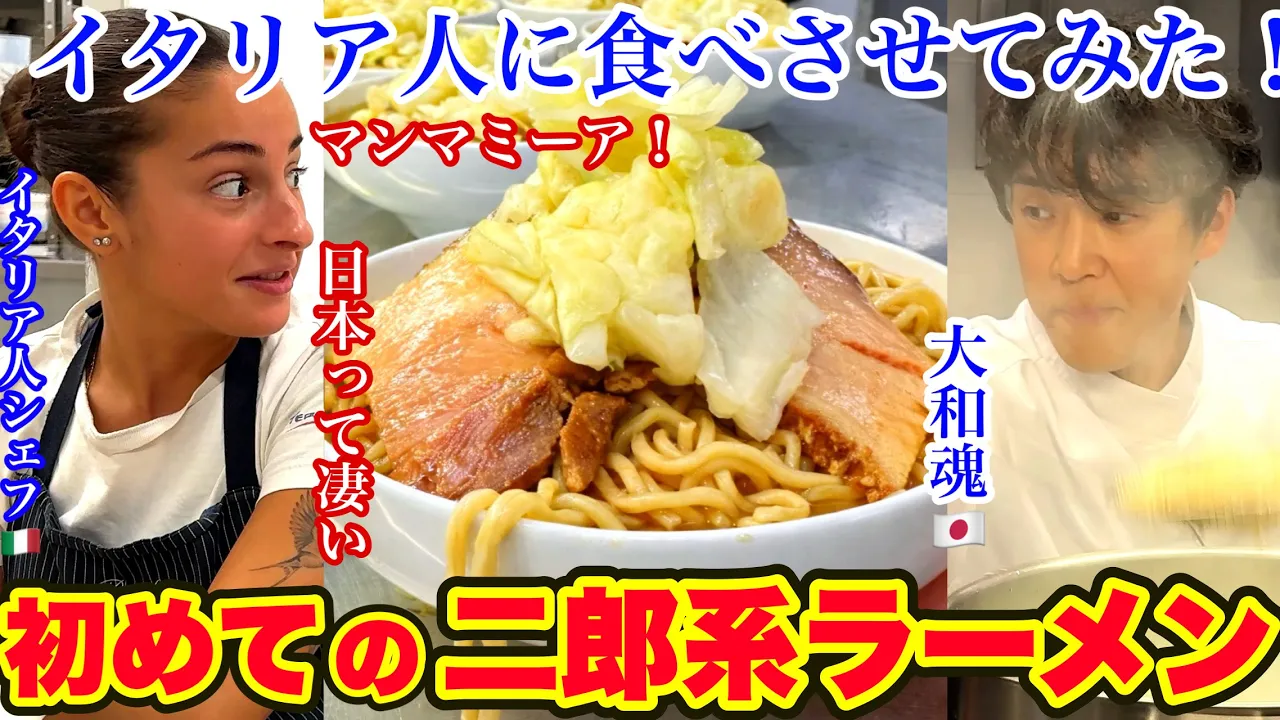
Jiro-style ramen improvised with local ingredients in the kitchen of a restaurant in Puglia, southern Italy. It features a rich tonkotsu broth simmered for two days from pork genkotsu bones (with tail included), a garlic-forward kaeshi tare, house-made noodles at 30% hydration, thick-cut chashu finished in the oven, a heaping pile of cabbage in place of bean sprouts, and a topping of back fat, garlic, and soy sauce known as the "oil bomb." A bowl served up for a crew of Italian chefs.

Instructions
- Clean the pork genkotsu bones (with tail attached). A lot of blood remains, so rinse thoroughly under running water to draw it out. Ideally you would leave them overnight, but if time is short a rinse under running water will do.
- Cut the aromatic vegetables (vegetable trimmings) and ginger that go into the broth base. Prepare the ginger for the kaeshi tare at this point as well.
- Put the genkotsu bones in a pot and bring up from cold water. This also serves to draw out the blood, so carefully skim only the first round of scum to get things clean. After that, simmer slowly, aiming to draw out the stock while letting it go cloudy.
- Clean the pork shoulder for the chashu, sprinkle it with salt, let it rest a while for the seasoning to settle in, then sear the surface.
- Make the kaeshi tare. Build it on a soy sauce base and, with no mirin or sake available, make up the sweetness with cane sugar. Since this is Jiro-style, add sliced garlic for punch and ginger as well. Italians find strong sweetness off-putting, so keep the finish restrained.
- Put the seared pork shoulder for the chashu into a vacuum bag together with the kaeshi tare and cook it slowly at low temperature for 4 hours. Since this is Jiro-style, cook it through properly rather than leaving it rosy.
- Keep the pork bones boiling over high heat, breaking them up vigorously to release the marrow inside. Once the broth turns milky white after about 7 hours, add a little water, then add the back fat and simmer for about an hour until soft. Once it is soft, add the aromatic vegetables to layer in sweetness.
- Day 2. Strain the pork bone base simmered the day before. There are many hard bones that would break a blender, so strain roughly first, then scrape out the marrow remaining inside the bones to extract all of it. After straining, add the aromatic vegetables to add sweetness and umami.
- Take out the back fat, now soft and jiggly, and combine it with chopped raw garlic and soy sauce to make the back fat, garlic and soy sauce topping (the oil bomb). Raw garlic piled on straight is hard for people to accept, so mix it into the lard instead.
- Make the house-made noodles. Bake the baking soda for about an hour to make it more alkaline and use it in place of kansui. Mix the baked baking soda thoroughly through the flour, then add the water. Set the hydration quite low at 30% for an authentic texture. Gather the dough, put it in a vacuum bag and let it rest.
- Strain the 8 hours' worth of broth simmered over two days for the final finish. The life-giving broth is complete.
- Roll out the noodle dough. The low hydration makes it hard work. Fold it over as you roll to make the dough smooth. Rolling it out all at once stresses the noodles and leaves the dough crumbly, so roll slowly while checking how the gluten is coming together by hand and by eye, then cut the dough into noodles at the end.
- Day 3. Chill the cooked chashu, then slice it. Cut it a touch thicker than usual, but not so thick that it becomes hard to eat.
- Prepare the vegetables for the finish. Since bean sprouts are unavailable, cut a firm, tightly packed cabbage for the heaping portion. Chop raw garlic for extra garlic as well. Lightly boil the cut cabbage (adjusted to a not-too-towering amount for this Italian version).
- Heat the base broth and add the oil bomb, loaded with plenty of garlic, to emulsify it. Run it through a blender once to finish, completing the special tonkotsu broth.
- Put the kaeshi tare in the bowl, pour in the broth, and add the boiled house-made noodles. Pile on a heaping portion of the boiled cabbage, arrange about 4 slices of thick-cut chashu, and top with the back fat, garlic and soy sauce oil bomb to finish it "mashi mashi" (extra of everything).
Reviews
No reviews yet. Be the first to review this recipe after making it
Log in to write one