Chef Okuda's World's Best Carbonara (Recipe by the Numbers)
Staple · Noodle · Italian25 min(Prep 10 min + Cook 15 min) · 780 kcal per serving · 1 serving · Normal
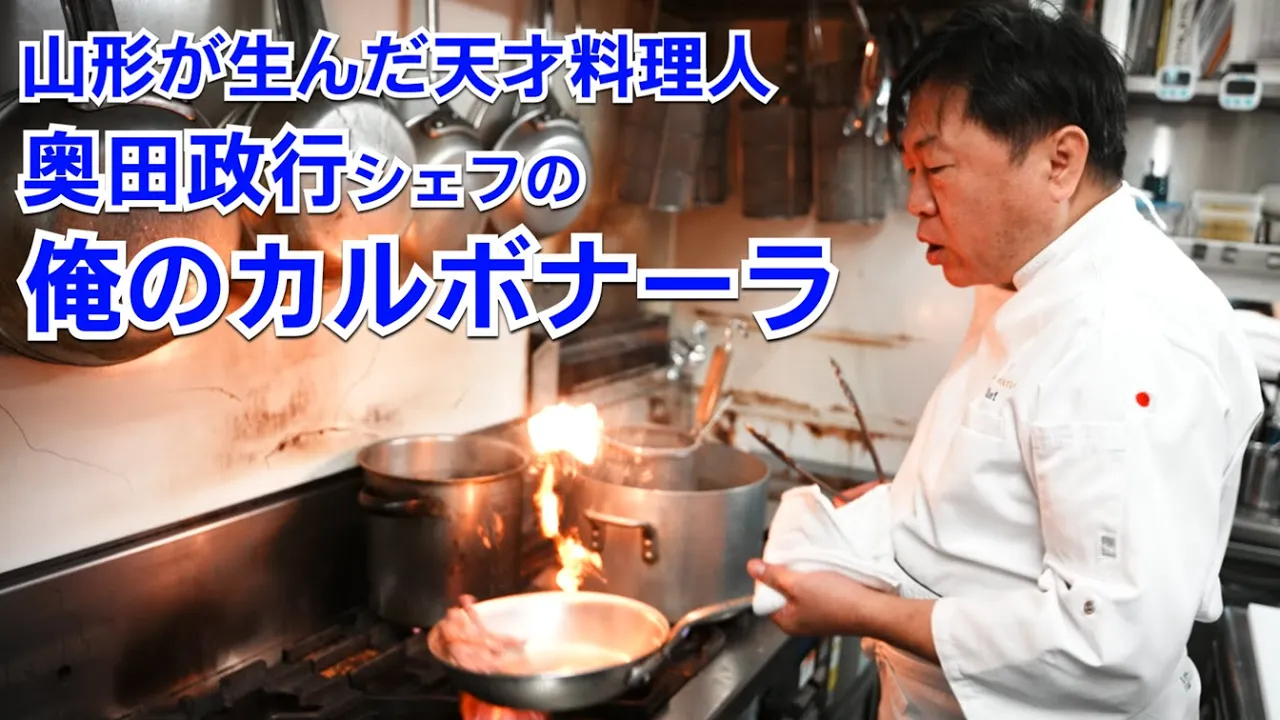
A carbonara from Chef Masayuki Okuda of the Italian restaurant Al Che-cciano, with everything quantified. He explains the logic anyone can reproduce: his "boiling theory" of cooking pasta in 3% salted water, temperature control that sets the egg mixture at 82°C, and the sequence of drawing out a charred flavor from the bacon before adding the cream. The second half also introduces a ristorante-style variation using duck and white asparagus.

Instructions
- Bring water to a boil and add salt equal to 3% of the water. Using salt that is 99.9% sodium chloride rather than rock salt or sea salt eliminates variation in flavor caused by minerals.
- The power of the 3% salt keeps the pasta surface from turning gluey and leaves it smooth, and the higher humidity of the water puts pressure on the noodles for a springy texture.
- Rub garlic around the inside of the bowl to leave a hint of aroma. The point is not to use the garlic as an ingredient but to "tuck in" its flavor. Crack a whole egg into the bowl, add salt, and make the egg mixture that becomes the base for scrambled eggs.
- Heat the pan thoroughly over fairly high heat. Control the pan temperature with the mindset of mastering the flame rather than being toyed with by it.
- Put the bacon in the heated pan and cook. The sizzling sound is a sign that moisture is escaping; once you hear it, raise the heat. At 175°C a charred flavor develops.
- Pour the heavy cream into the piping hot pan where the bacon has cooked. Once the heat brings them to the same temperature, the savory flavor of the bacon transfers to the cream, making a bacon-flavored cream sauce.
- Boil the spaghetti in the 3% salted water. For carbonara, both the bacon and the egg mixture carry saltiness, so boil the pasta on the shorter side so it does not absorb too much salt (without seasoning it).
- Add the boiled pasta to the pan of cream sauce heated to over 90°C and toss. At 90°C the surface of the pasta opens up and releases starch, so the cream works its way in, and the starch, fat, and heat create a roux-like thickness.
- Transfer the sauced pasta to the bowl of garlic-scented egg mixture and toss until the egg mixture reaches completely between every strand.
- Return the pasta coated in egg mixture to the pan and slowly bring it up to 82°C to develop thickness. Eggs begin to set at 82°C, so think of it purely as applying heat.
- Plate it and sprinkle cheese over the top. Grinding smoked black pepper in a pepper mill gives an even wilder, charcoal-grilled aroma.
Reviews
No reviews yet. Be the first to review this recipe after making it
Log in to write one