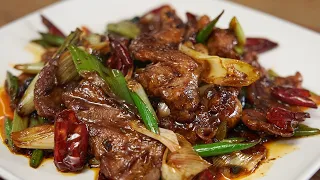
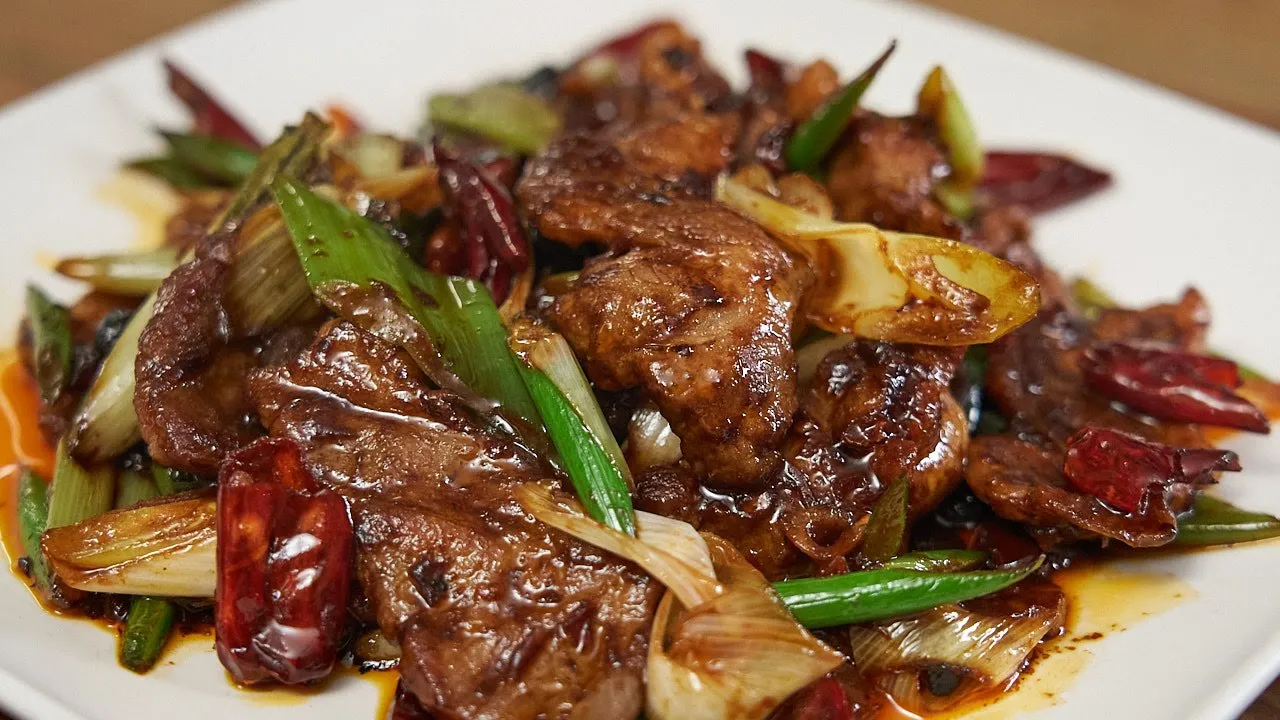
Sichuan Twice-Cooked Pork
Main · Chinese30 min(Prep 15 min + Cook 15 min) · 580 kcal per serving · 1 serving · Normal
Completely different from the sweet bean paste-based twice-cooked pork familiar in Japan, this is the authentic Sichuan version. It puts the sharp heat of doubanjiang front and center, layering aroma with douchi and dried chilies. Adapted for home cooking by skipping the pre-boiling of skin-on pork belly and using thick-cut pork shoulder meant for yakiniku. Instead of cabbage and bell peppers, it uses scallions, garlic scapes, and roughly cut garlic and ginger as the vegetables — a red, fiery, authentic dish.
See other ways to make Twice-Cooked Pork
Instructions
- Trim the tip off the Japanese leek and cut it on the diagonal. Use the green part too, for a touch of color.
- Cut off the tough tips of the garlic scapes and slice them on the diagonal. Their surface is tough and does not take on flavor easily, so cutting on the diagonal enlarges the cut surface and lets the flavor in.
- Slice 2 heads of garlic. Since there are few other ingredients here, the aromatics double as ingredients, so cut them on the larger side.
- Do not peel the ginger; slice about the same amount as the garlic into bite-sized pieces.
- Prepare as many dried chilies as you like. Splitting them open and removing the seeds keeps them from being as hot as they look, so you can enjoy the chili flavor. That completes the prep.
- Once the pan is hot, cook the meat first, on its own. This is a Chinese technique of cooking the meat separately ahead of time and combining everything at the end, so that every ingredient is cooked to its ideal point.
- At first the fat rendering from the pork looks cloudy — that is moisture carrying off-flavors. Keep cooking until the moisture evaporates, the fat turns clear, and the meat is browned, then remove it.
- Use the fat left in the pan as is — it is lard packed with flavor. Lower the heat to bring the temperature down so the aromatics do not burn, then add the garlic and ginger. Fry slowly over low heat to draw out the aroma.
- Once the garlic and ginger are fully aromatic, add the chilies, about 10g of douchi, and 1.5 tablespoons of doubanjiang. Keep the heat low and fry just enough to release the aroma without burning.
- Add liquid so nothing burns. Stir in 1 tablespoon Shaoxing wine, 1 tablespoon mirin, 1 tablespoon tianmianjiang, and 1/2 teaspoon soy sauce to make the sauce.
- Add the remaining leek and garlic scapes to the sauce, along with all of the meat you set aside earlier. Coat the ingredients in the sauce and stir-fry quickly over high heat. It is done once the leeks start to wilt slightly.
- To finish, drizzle chili oil over the top as a finishing oil, toss to coat everything, and serve.
Reviews
No reviews yet. Be the first to review this recipe after making it
Log in to write one