The Ultimate White Rice Cooked in a Rice Cooker
A chef with 23 years of experience shares how to cook the best white rice using nothing but a rice cooker. By carefully building up each step—measuring, rinsing, soaking, adjusting the water, steaming, and fluffing—you get rice where every grain stands up, glossy and fluffy, with a sweetness that comes through as you chew. You can reproduce it with a home rice cooker even without a clay pot.

INGREDIENTS
Ingredients
INSTRUCTIONS
Instructions
Prepare a colander and a bowl so you can drain the rice thoroughly. For the colander, one with punched holes or a softer material such as resin is better than a fine mesh type. Fine metal mesh can damage or crack the rice grains.
To cook consistently at your target firmness, measure the rice on a scale if possible. Here we cook 2 go, or 300 g. If you don't have a scale, a 1-go measuring cup is fine. Remove any damaged grains.
0:37~2 minAdd water to the rice, stir lightly and quickly, then immediately pour off the rinsing water. It will be quite cloudy at first. Repeat this about twice. Rice absorbs the very first water the most, and that first water contains bran, fine debris, and compounds that cause off-flavors, so use good-tasting water at least for the first rinse if you can.
0:52~2 minWith the water drained, rinse by stirring with your hand about 20 times, lightly rubbing the grains against each other. Shape your hand as if loosely gripping a baseball and rinse gently. After rinsing, add water again, stir lightly to wash away the bran and debris that have floated up, pour off the rinsing water, and repeat once more.
1:27~3 minBe careful not to over-rinse. The water doesn't need to be perfectly clear—stop once it has gotten fairly close to clear. Rinsing more than necessary strips away the rice's own aroma and flavor. Rice bran contains many of the compounds and nutrients tied to the aroma and flavor of rice, and since milling technology has advanced greatly, there's no need to rinse hard many times the way people used to.
Leave the rinsed rice in the colander, fill with water, and soak for 30 minutes to 2 hours. Aim for 30 minutes to 1 hour in summer, and 1 to 2 hours in winter. The warmer the water, the faster the rice absorbs it, but when the room is warm, as in summer, food-poisoning bacteria multiply easily around 30–40°C, so use the refrigerator to control the temperature. Here we soak for 2 hours.
2:23~120 minOnce soaking is done, drain the rice well in the colander for about 15 minutes so you can measure the water accurately. Thorough draining reduces variation in the water ratio. Even with the same 2 go, the rice changes by about 100 g in appearance and weight between before and after soaking.
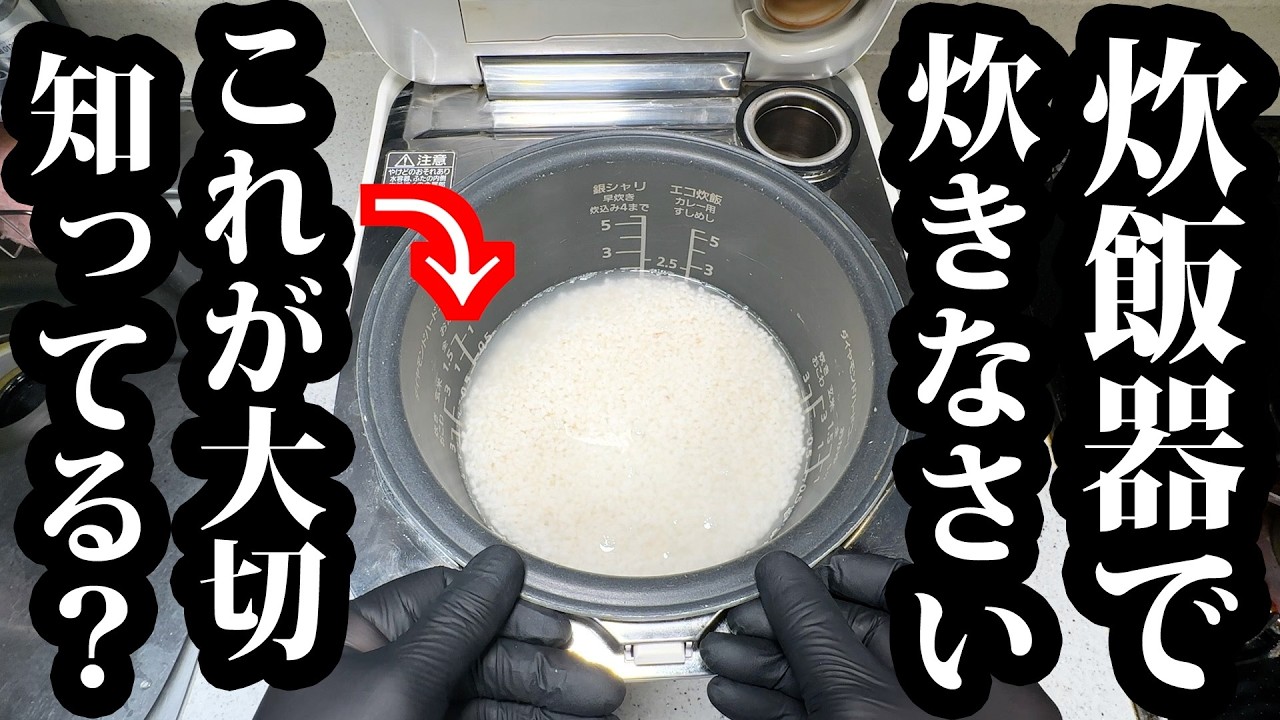
3:12~15 minPut the rice in the rice cooker and add water up to the 2-go line. If you want consistent results, using a scale is more accurate. 360 g of water gives a slightly firm texture with a bit of bite, which is the firmness we like; adjust between 360 and 400 g to taste. It ends up being about the same as the 2-go line.
Pouring the water in forcefully makes the rice uneven in height, and cooking it that way tends to create differences in how the heat travels. Hold the inner pot lightly and shake it side to side a few times to level the rice. This helps the heat travel more evenly.
Cook on the standard rice setting. The cooking cycle is generally designed to include the steaming stage, but after it finishes, let the rice steam for another 10 minutes without opening the lid. This lets the remaining moisture spread evenly through the rice for a fluffier result.
4:19~50 minWhen the time is up, open the lid. Each grain stands up with a glossy finish. Wipe off the water droplets on the lid to keep excess water from dripping onto the rice.
Freshly cooked rice has different moisture levels at the top and bottom, so cut a cross into it and fluff it by folding it up from the bottom. This releases excess steam while distributing the moisture evenly. Mix with a cutting motion so you don't crush the grains. When serving, don't pile it in all at once—add it in about three stages so it mounds lightly, which makes the rice look three-dimensional and appetizing.
4:53~3 min
REVIEWS
Reviews
Login required to post reviews
Login