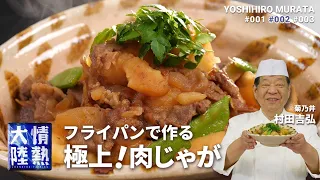
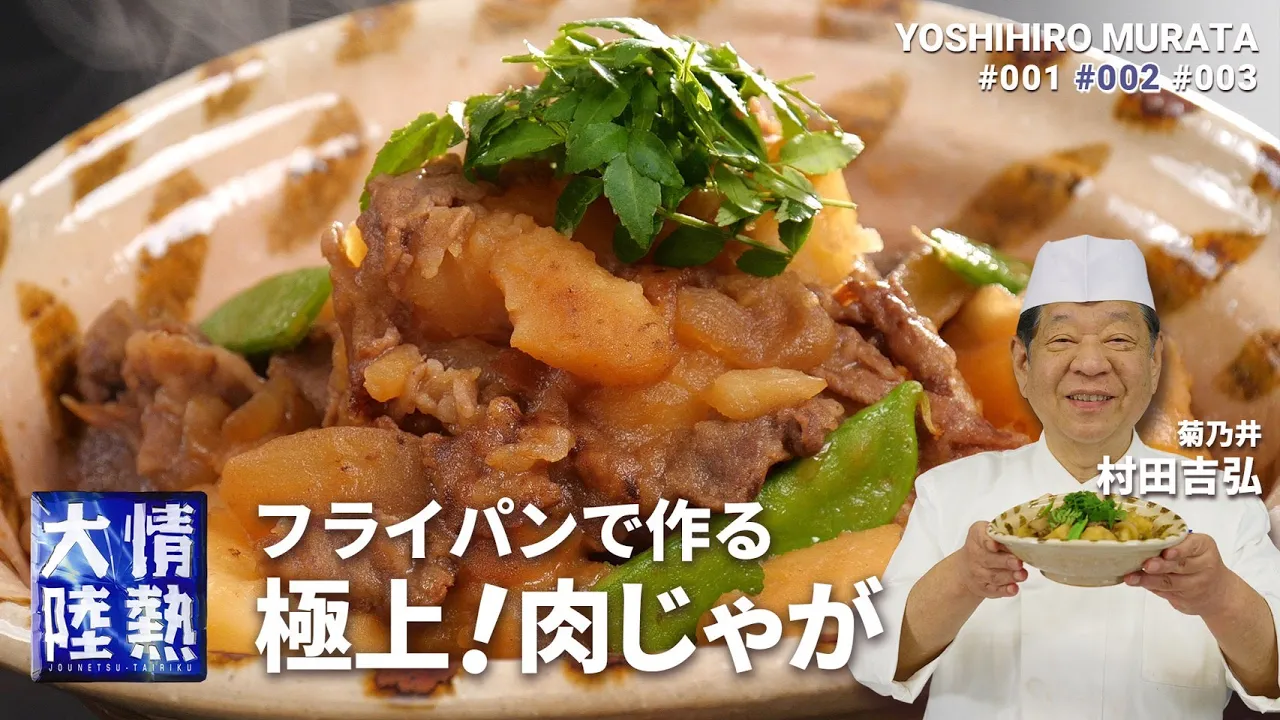
One-Pan Nikujaga Without Dashi
Main · Washoku30 min(Prep 10 min + Cook 20 min) · 380 kcal per serving · 2 servings · Easy
Japanese cuisine master Yoshihiro Murata teaches how to make nikujaga in a single frying pan without using dashi. Cut the potatoes into large chunks and pre-cook them in the microwave, then simmer with the golden ratio of 8 parts water, 1 part soy sauce, and 1 part mirin. The key is to have equal amounts of potato and simmering liquid. While you wait, you also make "nishikigi," a side dish combining umeboshi with katsuobushi, nori, and sesame.

Instructions
- Peel the potatoes (Danshaku) and cut them into large chunks. Nikujaga tastes better when the potatoes are not cut small. The edges will break down as they simmer, so the cuts can be somewhat rough.
- Loosely cover the cut potatoes with plastic wrap and microwave for about 5 minutes.
- Cut the onion in half and slice into wedges along the fibers. This keeps it from falling apart while simmering.
- Take the potatoes out of the microwave. They are ready when a skewer slides through easily.
- Add a little oil to the frying pan and, while it is still cold, add the beef and onion together and stir-fry. If you add the meat after the oil heats up, it clumps together and won't separate, so start with a cold pan.
- Once the meat has turned slightly white, add the potatoes and stir-fry briefly, just until they are coated with oil.
- Add the seasonings in a ratio of 8 parts water, 1 part soy sauce, and 1 part mirin. Add sugar if you prefer it sweeter. It is best to have roughly equal weights of potatoes and simmering liquid.
- Place a drop lid on top. If you don't have one, a plate you have on hand works as a substitute. Once the liquid comes up around the ingredients, turn to medium heat and simmer until done.
- If a fair amount of liquid is still left in the nikujaga, remove the lid, turn the heat to high, and cook it down to reduce the liquid. Stirring well shaves the corners off the potatoes and thickens the sauce.
- When it is done, add the snow peas and finish by cooking them briefly and stirring them in. It is ready once almost no liquid remains.
- Serve in a bowl and top with kinome to finish.
Reviews
No reviews yet. Be the first to review this recipe after making it
Log in to write one